
Hospital consultants across the East of England have used life-saving virtual technology to treat critically ill babies in regional hospitals, marking an unprecedented UK medical first as reported by ITV News Anglia.
The pioneering initiative, powered by the LocANTS platform developed at Cambridge University Hospitals NHS Foundation Trust (CUH) and resPNse Medical, allows tertiary specialist consultants from Addenbrooke's Hospital and the Rosie maternity hospital to effectively "parachute" their clinical expertise into district general hospitals. Specialist consultants can guide local neonatal teams at the cot-side in real time—without babies having to endure stressful and high-risk emergency road transfers.
Aurelia's Story: Treated Locally, Family Kept Together
One of the very first patients to benefit from the platform was baby Aurelia Hunt. Born prematurely at Colchester Hospital, Aurelia became critically unwell with suspected meningitis and sepsis.
Under traditional acute pathways, a severely ill preterm baby like Aurelia would face an immediate blue-light ambulance transfer to a specialist tertiary intensive care unit miles away in Cambridge. Instead, senior PaNDR (Paediatric and Neonatal Decision Support and Retrieval Service) consultants in Cambridge connected directly to Colchester Hospital's neonatal unit via LocANTS.
With live access to Aurelia's clinical telemetry, ventilator parameters, infusion pump feeds, and remote camera visuals, the specialist consultants reviewed her notes, inspected X-rays, and guided the local medical team through critical stabilisation decisions. Aurelia was safely treated in Colchester, avoiding the physiological risks of emergency transport and allowing her parents to remain by her side.
"It was a huge relief that the technology existed. Had it been different, it would have completely blown our family life for a couple weeks. It was hard enough already and it would have made it even harder."
— James Hunt, Aurelia's FatherHow LocANTS "Parachutes" Specialists to the Cot-Side
LocANTS connects tertiary neonatal and paediatric intensive care consultants based at the Addenbrooke's PaNDR control room directly to regional partner units, including Colchester, Peterborough, and Ipswich hospitals.
Through secure, high-definition digital streams, consultants can:
- Control remote cameras and microphones mounted on cot-side workstations to examine the baby's clinical signs and physical condition.
- Examine diagnostic imaging in real time, including bedside X-rays, ultrasound scans, and blood gas panels.
- Monitor live biomedical readings from ventilators, vitals monitors, and infusion syringe drivers.
- Conduct multi-disciplinary consults with district hospital doctors and nurses to reach consensus on difficult clinical decisions.
If an infant's condition deteriorates, the Cambridge retrieval team can rapidly dispatch a dedicated intensive care ambulance. However, by enabling high-level specialist guidance earlier at the district general hospital, LocANTS eliminates the need for physical transfer in a majority of evaluated cases.
"LocANTS now enables clinicians to pool their combined expertise to make difficult decisions about difficult cases in real time, even though they may be miles apart. It is in its infancy, but has the potential to become something very big."
"This is a classic example of different people, with widely differing skill sets, working as a team to develop something that has the potential to be truly remarkable and solve at a stroke a lot of risks, complications and pressures associated with neonatal transport."
— Dr Sue Broster, Consultant in Neonatal Intensive Care & Deputy Medical Director, Cambridge University HospitalsA Multi-Disciplinary Partnership Saving Lives
The driving force behind LocANTS brings together senior NHS clinical leaders and digital health innovation: Addenbrooke's deputy medical director Dr Sue Broster, paediatrician Dr Arun Dhar, and technology entrepreneur Ranadip Chatterjee, founder and CEO of resPNse Medical.
Dr Arun Dhar, who originated the concept within the Addenbrooke's transport service, highlighted that LocANTS would undoubtedly save lives by removing the delays and geographical barriers that often complicate acute neonatal decisions.
By enabling infants to be treated locally, the platform delivers three major benefits across the NHS ecosystem:
- Improved patient and family outcomes: Babies avoid the physiological instability and risks of emergency transit, while parents are spared the financial burden and emotional separation of travelling to distant regional hubs.
- Critical capacity protection: Regional Level 3 NICU beds and dedicated paediatric ambulance crews are reserved for the sickest infants who strictly require surgical or tertiary intervention.
- Significant transfer reductions: In initial pilot series, LocANTS demonstrated a 66% reduction in unnecessary transfers, while maintaining strict clinical governance and safety standards.
Cambridge doctors save baby's life using virtual technology in UK first
Watch the full televised report by Claire McGlasson and read the original ITV News Anglia coverage.
Follow-up: 21 Months Later at the UK-India Healthcare Convention
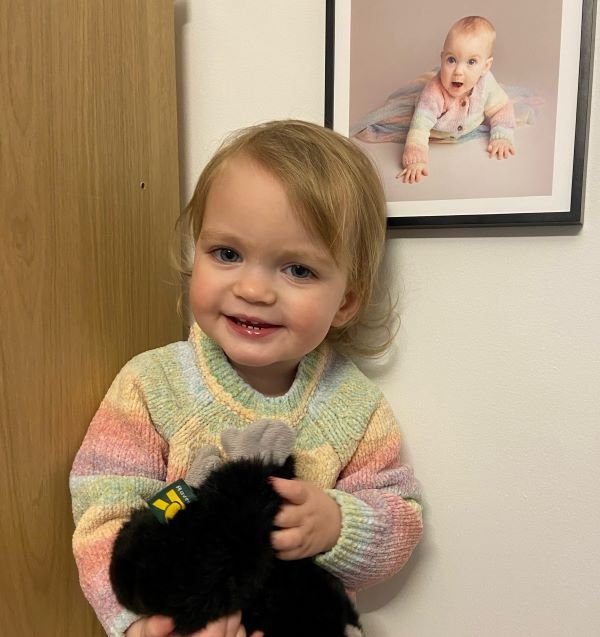
In April 2024, international health leaders at the UK-India Healthcare Convention in London were treated to a surprise input from James and Nicola Hunt, whose daughter Aurelia—now 21 months old, thriving, and "doing very well and super cheeky"—joined remotely to share their continued gratitude for the technology that kept their family together.
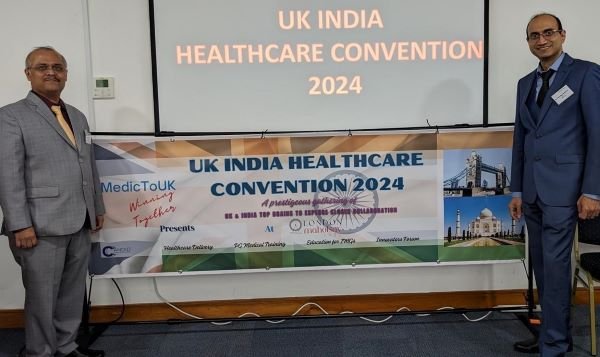
At the convention, guests watched as LocANTS was demonstrated outside an NHS setting for the very first time. Clinicians showed how point-of-care echocardiography (an ultrasound scan of the heart) performed by a non-specialist at a district hospital could be guided and interpreted in real time by a remote tertiary cardiologist.
Read the full coverage from Cambridge University Hospitals NHS and the Daily Gazette.
From Regional Pilot to National Scale
Following its initial success across Colchester, Peterborough, and Ipswich hospitals, LocANTS has expanded its capabilities. Backed by the MedTech Accelerator, Health Innovation East (formerly Eastern AHSN), and subsequent selection for the NHS Innovation Accelerator (NIA) 2026 cohort, resPNse Medical is now scaling the platform nationally across NHS Trusts and extending its real-time collaboration workflow into other time-critical pathways, including adult burns and stroke networks.